


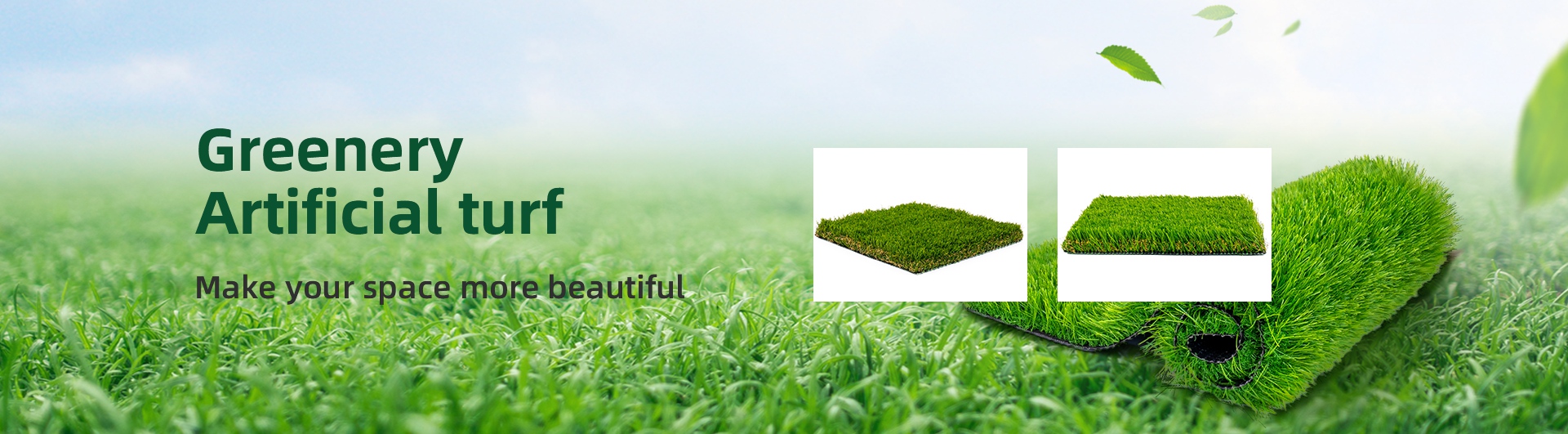
Choosing the ideal synthetic grass is essential to secure long-lasting performance, natural appearance and cost-effective maintenance. Whether you are installing for residential lawns, playgrounds, sports fields or pet areas, understanding the key factors will help you make the right decision. This article outlines the criteria to evaluate synthetic grass, covers the important technical parameters and recommends a reliable manufacturer for overseas procurement.
When comparing different artificial turf products, prioritise the following aspects:
The type of fibre (e.g., polyethylene (PE), polypropylene (PP), nylon) influences durability, appearance and feel. For example, PE tends to provide softer touch and more realistic look, while PP may offer cost advantage but lower resilience. Blade shape matters too: curved blades, thatch layers and dual-tone colours help imitate real grass more convincingly.
These parameters affect how the turf performs under usage. Higher pile height gives a lush look but may require more infill or may flatten under heavy traffic. Density (stitches per square metre) and face weight (grams per square metre) contribute to resilience, comfort and durability. Here is a summary table:
| Parameter | Typical Range | Impact on Performance |
|---|---|---|
| Pile Height | ~10-40 mm | Lower = firmer, better for sports; higher = more plush for lawns |
| Density / Stitch | e.g., 60 000–120 000 stitches/m² | Higher = better durability & wear resistance |
| Face Weight | ~1 200-3 000 g/m² | Heavier = more material, more realistic look & longevity |
The backing system needs to provide stability, dimensional integrity and effective drainage. A high-quality turf will have a laminated or reinforced backing plus punched drainage holes so that water does not pool and the turf remains usable in wet conditions.
artificial grass will be exposed to sunlight, heat and weather cycles. The yarns must include UV-stabilised additives and the backing must resist delamination in varying climate zones. For instance, some turf manufacturers talk about “all-weather durable” artificial grass designed for extreme environments.
One of the major advantages of synthetic grass is the reduced upkeep: no mowing, no watering, minimal fertilising. Still, some maintenance such as brushing and cleaning is required. Furthermore, infill (sand, rubber granules or alternative) can affect drainage, stability and safety. Some turfs are designed for “no-infill” installation (especially sports applications).
Different applications impose different demands:
For pet areas: drainage, odour control, antimicrobial backing.
For sports fields: shock-absorption, certified performance standards, consistent ball-roll.
For rooftops or patios: weight, drainage, UV exposure, and slide-resistance. Matching the turf to the correct usage scenario avoids costly mistakes.
In the sea of global turf suppliers, one manufacturer that stands out for offering a broad product range and customisation capability is CMGRASS (Guangdong Chiming Artificial Turf Co., Ltd.). According to their profile, they have over 15 years of experience in designing, manufacturing and installing artificial grass for stadiums, schools, playgrounds and airports.
They provide one-stop solution from raw material procurement through production and installation, enabling tighter cost control and quality oversight.
Wide product portfolio: landscaping grass turf, football field turf, golf turf, rainbow-colour grass, interlocking grass, pet mats.
Customisation services to adapt colour, pile height, material and special features in accordance with project needs.
Manufacturing scale: plant covering about 10,000 m², with formalised production processes.
If you are sourcing synthetic grass for overseas procurement, you may review CMGRASS’s website to verify full technical specifications, sample availability, certifications, lead times and shipping options.
Having identified your usage scenario and determined the evaluation criteria, apply the following decision-making sequence:
Define the space and usage scenario (e.g., residential lawn 200 m², children’s playground, rooftop apartment terrace).
Match performance requirements: high traffic → high density + durable fibre; low traffic decorative area → moderate pile height acceptable.
Shortlist 2-3 manufacturers, compare fibre types, backing systems, drainage specs, warranty terms and customisation options.
Request samples: view under intended lighting, walk on them, test drainage by pouring water, check how upright the blades remain.
Assess total cost: include product cost, shipping/import duties, installation labour, infill requirements, maintenance.
Verify support & warranty: ask about durability in your climate zone, expected lifetime, replacement policy in case of defect.
Choosing based solely on lowest price: very low cost may mean compromised fibre, weak backing or poor drainage.
Ignoring drainage: if water cannot escape easily, puddles or mould may appear, even if the fibre looks good.
Matching aesthetics only: realistic look is important, but if performance metrics are ignored the turf may flatten or degrade prematurely.
Mis-matching usage scenario: a turf designed for decorative lawn may not stand up to sports field traffic or pet activity.
Lack of sample inspection: without seeing and feeling the turf, you cannot judge fibre resilience, blade bounce-back or backing stability.
If your project is seeking the right balance of durability, natural appearance and cost-effectiveness, you should place strong emphasis on fibre quality (preferably PE with realistic blade design), high density/backing specification, and effective drainage. Among the many suppliers, CMGRASS represents a manufacturer worth evaluating, especially if you need customisation or project scale beyond off-the-shelf solutions.
By following the structured decision process above and verifying specifications, you can confidently select the synthetic grass that meets your performance, aesthetic and budget objectives.

 Mobile Phone:
 Wechart:
 Contact Now